
Featured resource
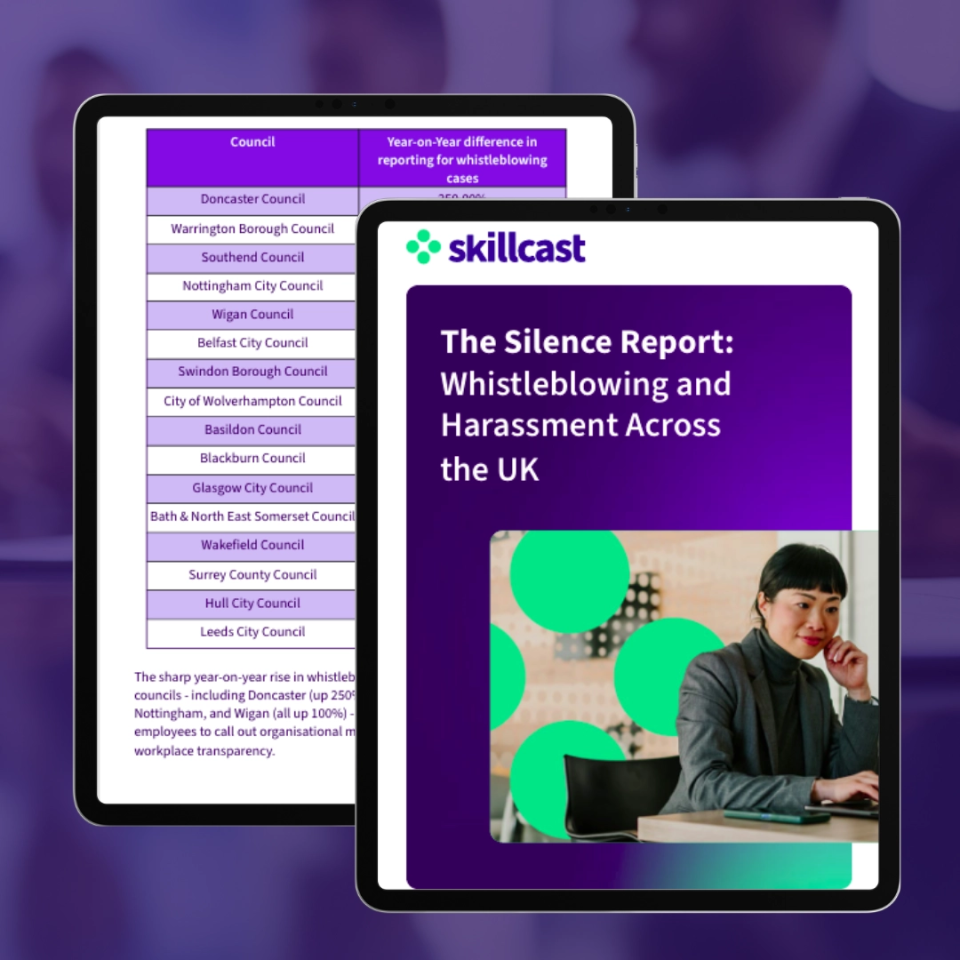
The Silence Report: Whistleblowing and Harassment Across the UK
What does it include:
- UK‑wide analysis of whistleblowing activity and harassment reporting trends, based on FOI data from councils across the UK
- Evidence showing rising harassment concerns but very few internal whistleblowing disclosures, highlighting major reporting gaps
- Insights into cultural barriers such as fear of retaliation, unclear reporting routes and low confidence in internal systems
- Context on how ERA 2025 strengthens protections for sexual‑harassment disclosures by treating them as protected whistleblowing
What's included
.png)
E-book: Moving from Policy to Proof: Employment Rights Act 2025
What does it include:
- Shift from policy-based compliance to evidence-based “proof” of harassment prevention under ERA 2025.
- A full end-to-end operating framework covering policies, reporting routes (including anonymous), investigations, escalation paths, and anti-retaliation controls.
- Strong focus on measurement and data use, including tracking training completion, case timelines, reporting trends, and maintaining auditable records.
- Guidance on culture, governance, and risk management, including third-party conduct, contracts, documentation standards, and continuous monitoring systems.
Who's it for?
- HR / People teams
- Compliance & Legal teams
- Senior leadership
- Line managers / supervisors
Guide: Employment Rights Act UK
What does it include:
- A concise overview of how ERA 2025 raises employer accountability and makes prevention a legal duty
- Practical guidance on managing harassment as a systemic risk with tailored, environment‑specific controls
- Clear steps for handling sexual‑harassment disclosures as protected whistleblowing from 2026
- UK‑wide insights revealing reporting gaps and cultural barriers from FOI‑based whistleblowing analysis
- Checklists to help evidence compliance and maintain auditable prevention measures

Employment Rights Act: Employer Checklist
What does it include:
- Practical guidance on ERA 2025’s shift to proactive, evidence‑based prevention as the legal standard
- Clear actions for assessing and managing harassment as a systems‑level risk across real working environments
- Steps for handling sexual‑harassment disclosures as protected whistleblowing, including manager escalation expectations
- Checklists to document risk assessments, preventative controls and decision‑making in ways tribunals expect to see
- Guidance on speak‑up culture, confidentiality risks and addressing barriers that prevent employees from reporting concerns

Webinar: Employment Rights Act and Workplace Harassment
Synopsis of the session:
This session explores how the Employment Rights Act 2025 transforms workplace culture into a legal obligation, significantly increasing employers' responsibilities beyond those under the Worker Protection Act. It focuses on the practical implications of expanded whistleblowing protections, third‑party harassment liability and the move to an “all reasonable steps” standard, highlighting what employers must do and document ahead of the April and October 2026 implementation milestones.
Key messages:
- The Employment Rights Act 2025 represents a fundamental shift in employer accountability, not a minor legal update
- Preventing harassment is now a proactive, evidence‑based legal duty, not a reactive response
- Sexual harassment disclosures become protected whistleblowing reports from April 2026
- Employers face direct liability for third‑party harassment from October 2026
- Policies, training, reporting routes and record‑keeping must operate as one joined‑up compliance framework
Learn more about the Employment Rights Act in our blog
Best practices, expert opinions, and emerging industry trends — all in one place.

AI Adoption in The Workplace Report: The UK's Governance...
14 minute read
New research from Skillcast reveals how AI adoption is accelerating across UK workplaces, while governance, policies and employee training struggle to keep pace.

Why Enterprise Organisations Require Advanced Compliance...
7 minute read
Discover the essential features of enterprise compliance training software, from global scalability and localisation to audit-ready reporting and automation.