It’s not easy to deliver compliance training when you have a large, diverse and perhaps globally distributed workforce with different language and accessibility requirements.
It’s a given that employees need fair and equitable access to training if they’re to protect themselves, their colleagues, customers and the organisation. So how do you remove the barriers that could stand in their way?
Key takeaways
- Localisation can be more powerful than direct translation alone: Direct translation sometimes misses cultural nuances and local legal requirements. Adapting scenarios, examples and regional regulations ensures training stays relevant and clear across different territories.
- Accessibility improves training for every employee: Courses that meet WCAG standards (including clean layouts, screen-reader compatibility and keyboard navigation) provide a positive user-experience for everyone, not just employees with disabilities.
- Universal design with in-built flexibility: Captions, transcripts and flexible course formats support neurodivergent and disabled employees, and have English as a second language, while making everyone feel included.
- Ask pilot groups to test platform before rolling out: Checking technical features like screen-reader software and gathering feedback from a diverse test group helps identify issues before rolling out training across the organisation.
What we'll cover
- The importance of accessibility features
- Understanding learners' needs
- Delivery models compared
- Direct translation – or deep localisation?
- Questions to ask your training platform vendor
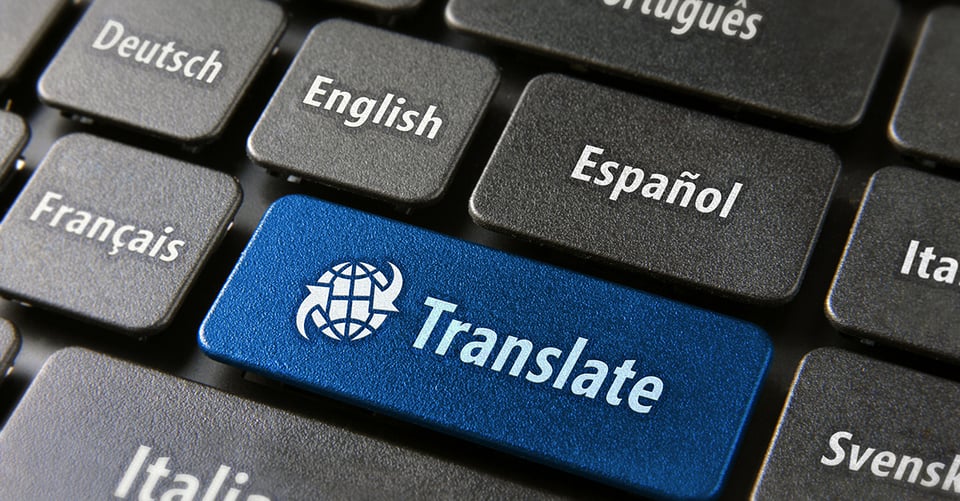
Many online training providers have multilingual options but it’s important to choose one that localises content so that it’s relevant and relatable, and includes modules on territory-specific regulations.
Skillcast’s Global Compliance course library offers courses in 10 of the most widely-used languages (English, Brazilian Portuguese, simplified Chinese, Dutch, French, German, Italian, Japanese, Polish and Spanish). There’s also region-specific content in the EU compliance e-learning library.
The importance of accessibility features
It’s not only language that can stand in the way of successful training.
Content must also be accessible to employees with additional needs such as visual, hearing and cognitive impairments. That means being compatible with assistive technology, like screen readers, and clearly written and designed to reduce mental load and prevent confusion.
There are 5.5 million disabled people in employment today, according to UK government figures. Accessible training helps them to stay in their job, and perform it well and safely. Public sector organisations are legally required to meet accessibility standards for digital content, whether it be public-facing (such as a website), or internal (intranet and training materials).
Skillcast’s content meets Web Content Accessibility Guidelines (WCAG) 2.0 AA standards, and we work with experts to continuously improve the accessibility of our courses. Prioritising readability, a clean design and mobile responsiveness makes training easier and more engaging for everyone, not just those with disabilities.
Understanding learners’ needs
Language and accessibility barriers may be distinct but they share similarities. Clear video transcripts, for instance, are helpful for people with hearing impairments or who struggle with cognitive overload and want to read content in their own time. But they’re just as valuable for people who use English as a second language for similar reasons.
There are also specific requirements for accessibility – such as screen-reader compatibility and keyboard navigability to support those with motor disabilities.
Not every employee discloses their disability, while others haven’t been formally diagnosed. Providing transcripts, captions and a range of course formats (in-depth, scenarios, quizzes, microlearning) ensures that training is accessible as standard, so nobody is unfairly disadvantaged. Skillcast combines a universal design, so every learner has the same high-quality experience, with different course formats and localisations.
Delivery models compared
There are three routes to compliance training delivery, depending on the provider you choose.
Some provide the infrastructure – a learning management system (LMS) that allows you to buy or build your own courses and track key metrics like completion rates. Others include off-the-shelf content libraries and custom built courses.
There are also emerging delivery models such as peer-to-peer learning, where colleagues share content and best practices, and AI-driven training, where AI is used to develop content. Both have their benefits, but always check that the content meets the rigorous requirements of regulators.
Skillcast offers three delivery models – off-the-shelf content libraries, LMS, and custom course builds with bespoke training tailored to your internal policies, tone and accessibility requirements.
Learners can also access an AI-powered digital assistant, Aida, giving them access to instant answers from your own policies. It’s a handy tool for everyone, but it’s particularly helpful for people who need more time to digest information.
Direct translation – or deep localisation?
Thanks to AI, it’s easier than ever to translate e-learning courses into almost any language.
The problem is that direct translations don’t always reflect cultural nuances. New and complex regulations require careful navigation, while topics like harassment must be handled sensitively. Deep localisation adapts scenarios, names, currencies and cultural context so the learning resonates with different teams.
Content should be tailored to the regulations of the countries in which they operate, whether it be meeting the requirements of the FCA in the UK, or EU regulations like the Digital Operational Resilience Act (DORA).
What do vendors offer?
- iHasco: Provides machine-translated subtitles across more than 40 languages at no extra cost for businesses needing broad coverage quickly.
- Lingio: AI-powered learning, with a focus on accessibility. It specialises in frontline worker training in sectors like elderly care and hospitality.
- Skillcast: Combines regulatory governance with accessible features and a range of localisation options. The Global Compliance library delivers human-translated training in 10 key languages including French, German, Spanish and simplified Chinese. There is also a specific EU compliance library and specialise in highly-regulated complex industries such as financial services and the public sector. Machine or human translation (or both) available.
Questions to ask your training platform vendor
We’ve put together the following questions to help you choose the right vendor for your organisation.
Language
-
How does the platform handle languages with non-Roman script such as simple Chinese?
- Is the content machine or human translated?
- Can learners change the language themselves?
- How is content localised, not just translated?
Accessibility
- Does the platform meet accessibility standards such as WCAG 2.1 AA?
- Does the platform generate captions and transcripts for video content?
- Can learners use a keyboard to navigate content?
Once you’ve chosen your platform, the next step is to test it before rolling it out to the wider workforce.
Check technical features such as compatibility with screen-reader software and keyboard-only navigation, and that video content aligns with captions. Confirm too that transcripts download correctly and reflect the on-screen material.
User feedback is also critical, so test the software with a pilot group of employees who are not native English speakers or who have accessibility needs. Incorporate their recommendations, working with your vendor if needed, to make sure everyone can access the training they need to stay compliant.
Ready to access multilingual compliance training?
Depending on your business' needs, we offer an EU Compliance library with course translated into English, German, French and Dutch. While our Global Compliance library offers courses in 10 languages. To book your demo and see why over 1,400 companies trust us as their compliance training partner, get in touch.
Written by: Emmeline de Chazal
Emmeline is an experienced digital editor and content marketing manager. She has a demonstrated history of working in both the education management and software industries. Emmeline has a degree in business science, and her skillset includes Search Engine Optimisation (SEO), Answer Engine Optimisation (AEO) and digital marketing analytics. She is passionate about education and utilising her skills to encourage greater access to e-learning.